
Structural Advantages, Soft Commodities, and the Middle East: How to Build Exposure to LatAm Agriculture?
March LatAm Report: The Agriculture Edition

Latin America has a few structural advantages: healthy demographics, relatively low geopolitical risk, and abundant resources. In the context of geography, LatAm has another edge: the leading exporters of commodities, Brazil (oil, iron ore, and crops), Chile (copper and lithium), and Argentina (LNG, industrial metals, and crops), are not dependent on choke points. For instance, Brazil moves more than 50% of its iron ore from Ponta de Maderia, located on the Atlantic coast. Look at the map below:
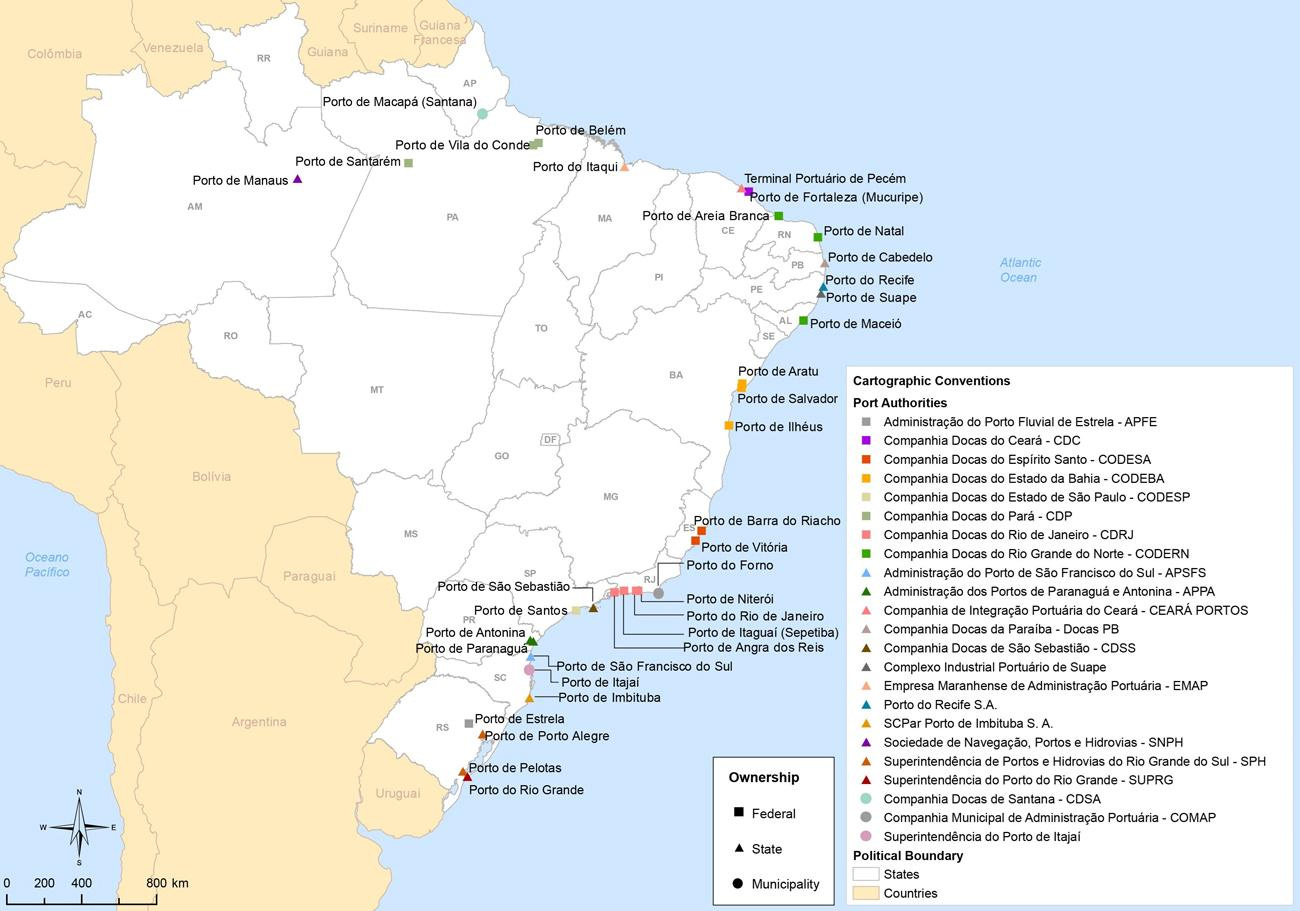
The map shows major Brazilian ports. As seen, the exports are sailing directly to the Atlantic Ocean. The effect of choke points may emerge later, as exports approach importers. For example, China is a major iron ore importer and relies on the Malacca Strait.
The current situation in the Middle East is just making LatAm’s strengths more apparent. The event chain of Hormuz closure and cutting industrial capacity (energy, fertilizer, and chemicals) benefits LatAm greatly.
Let me refresh the role of Hormuz for global food production. Before the closure, approximately 43% of globally traded urea, 47% of globally traded sulphur, 27% of ammonia, and 24% of phosphate fertilizers transited via Hormuz. Qatar, Saudi Arabia, the UAE, and Oman are among the world’s largest fertilizer exporters, leveraging cheap natural gas to produce nitrogen-based products at scale. With QatarEnergy halting LNG and urea production in early March and insurance premiums reaching prohibitive levels, the physical flow of these nutrients to global markets has been severed.
The interesting thing is that the situation was already tight, even before the war, due to a few constraints:
First, China restricted phosphate exports (including MAP, the primary phosphate product for soybean and corn planting) through at least August 2026, removing a critical alternative supplier.
Second, European nitrogen production has been running at approximately 75% capacity since the 2022 energy crisis, constrained by high natural gas prices.
Third, Russian ammonia exports never fully recovered after the Togliatti-Odesa pipeline disruption, and new EU tariffs are phasing out Russian/Belarusian fertilizer imports entirely by 2028.
The timing of the crisis is the worst possible moment. Northern Hemisphere farmers (the US, Europe, India, and China) are entering the March-May planting window, when final fertilizer purchases are made. While many US farmers pre-purchased fertilizer in autumn, not all did, and the second nitrogen application (typically in May-June for corn) is now in jeopardy. Let’s not forget that there is no fertilizer strategic reserve that can absorb a supply shock during dire situations.
The Northern Hemisphere disruption cascades to LatAm through a few channels:
Competition for scarce supply: Any available non-Gulf fertilizer cargoes (from North Africa, Russia, or Trinidad) are being bid up by Northern Hemisphere buyers whose need is more immediate. Reports indicate available cargoes in Brazil are already being diverted to the US, where prices are higher.
Reduced Northern Hemisphere yields: If US, European, and Indian yields fall due to sub-optimal fertilizer application, global grain stocks tighten, increasing the world’s dependence on the Southern Hemisphere’s subsequent harvest and raising both the opportunity and the stakes for South American producers.
Input cost inflation: Brazilian and Argentine farmers purchasing fertilizer from May-August for September planting face a higher price floor regardless of direct Gulf exposure.
Then the question is how to build LatAm agriculture exposure. To figure it out, consider that the effects of the Middle East crisis are cascading and unevenly distributed in time and space. Simply, there is a time lag across industries of how effects unfold. The first beneficiaries are fertilizer producers with zero negative exposure to Hormuz.
A side note: I categorize energy/fertilizer/chemical companies based on the polarity of their Hormuz exposure. Enterprises with negative exposure are those that import/export a significant portion of their inputs or outputs to the Gulf. Conversely, a positively exposed company has single-digit or better zero exposure to the Hormuz Strait. In short, the former are the losers, and the latter are the winners.
Then come agricultural producers. They capture the difference between the growth rates of food and fertilizer prices. This means they keep expanding margins even as input costs rise.
The last line is the landowners. If the crisis persists, the effects on fertilizer and food prices will be enormous. Given that Brazil and Argentina are distant from any geopolitical hotspots and do not depend on chokepoints for their exports, the land in both countries will appreciate significantly.
Here are the three tiers:
Tier 1 (Input Cost Beneficiaries): Vittia (BMFBOVESPA: VITT3) and Fertilizantes Heringer (BMFBOVESPA: FHER3) are potential winners of the fertilizer crisis. Vittia’s biological inoculants become more attractive to farmers when synthetic nitrogen is scarce and expensive. This is basically a thesis based on import substitution. Heringer, as a fertilizer blender and distributor, earns wider margins during rapid price increases as inventory values appreciate between purchase and sale.
Tier 2 (Direct Crop Price Beneficiaries): SLC Agrícola (BMFBOVESPA: SLCE3), Adecoagro (NYSE: AGRO), and BrasilAgro (NYSE: LND) are pure-play farming operations with the most direct leverage to rising soybean, corn, and wheat prices. SLC is the largest and most liquid domestic name in the list. Adecoagro adds geographic diversification (Argentina and Uruguay) and exposure to sugar and ethanol. BrasilAgro offers unique optionality via its land transformation model, where rising commodity prices increase both operating income and underlying land values simultaneously.
Tier 3 (Downstream and Land Value): Cresud (NYSE: CRESY) provides Argentine wheat and land-banking exposure. São Martinho (BMFBOVESPA: SMTO3) and Cosan (NYSE: COSAN) capture the sugar/ethanol complex, which benefits from both higher sugar prices and rising oil/energy prices (ethanol as a substitute fuel). Minerva Foods (BMFBOVESPA: BEEF3) captures the protein chain. Higher grain prices initially compress feed margins, but rising food prices overall benefit protein producers, and South American grass-fed beef has lower grain dependency than US feedlot operations.
Intentionally, I excluded potash miners. Although they offer extreme leverage to fertilizer prices, they carry all the risks inherent to junior miners. Think about excess share dilution, questionable management, and overtly generous top brass’ compensation. Lack of trading liquidity is a lovely bonus to handle.
The names listed above are mostly traded in the B3 exchange based in Sao Paolo. The good news is that a few of the tickers are available on the NYSE: Cosan, Cresud, Brasil Agro, and Adeco Agro.
In conclusion to today’s piece, I will share two wonderful monthly charts:
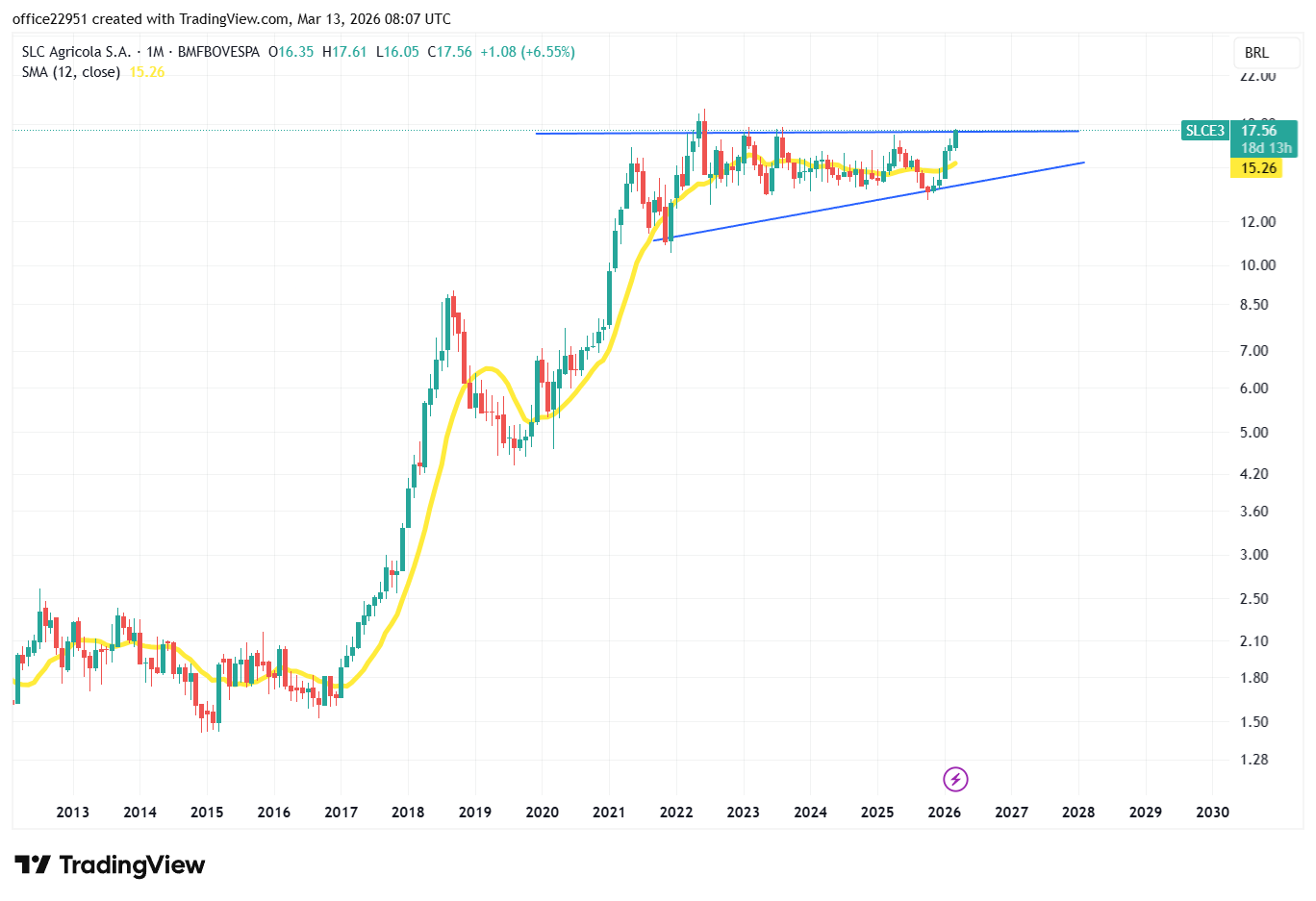
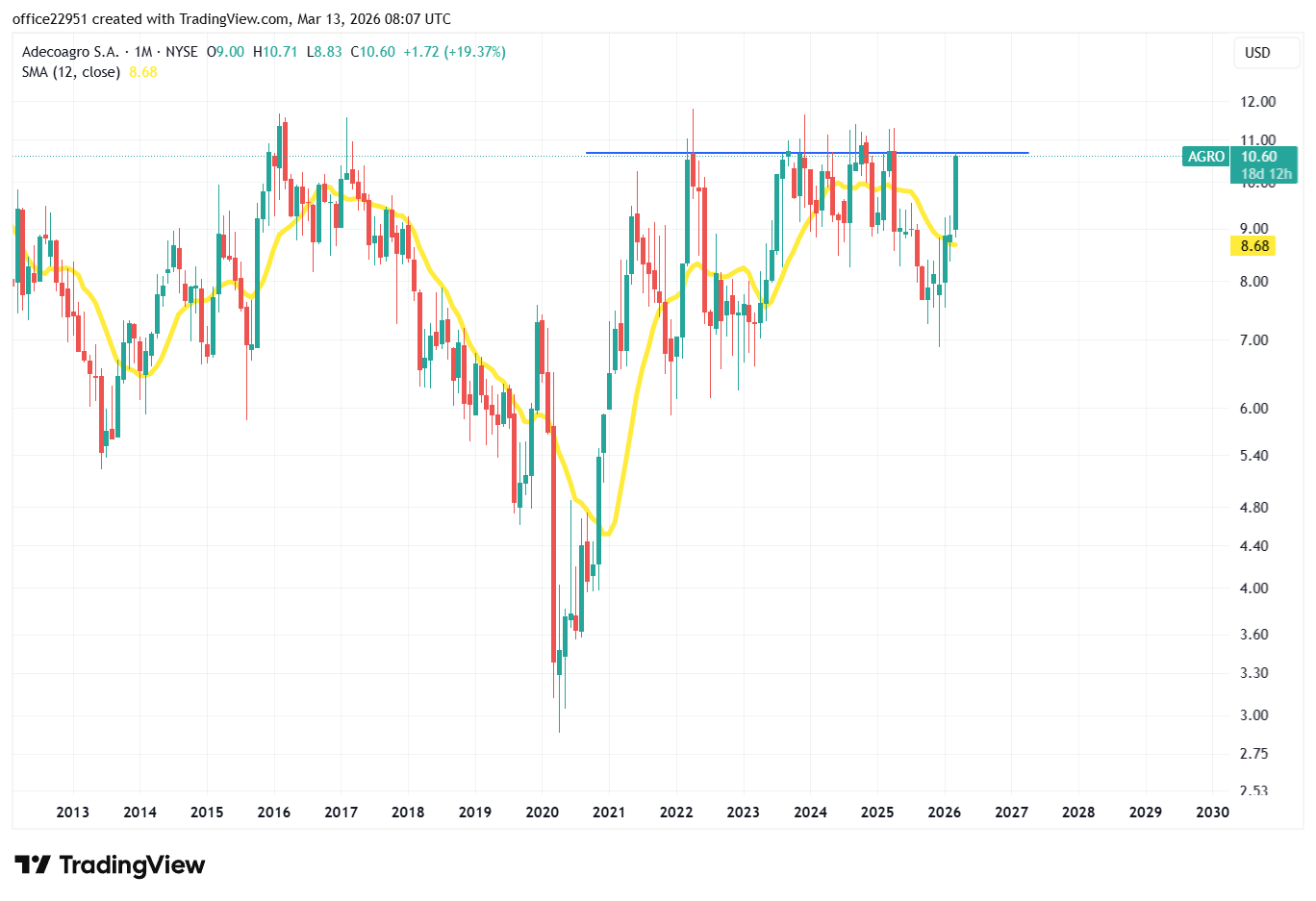
What we have here is Tier 1 setups (the price is on the verge of a phase transition and is still a few candles away from the 12MMA), combined with a powerful macro catalyst (the crisis in the Middle East and its cascading effects).
This is a reminder of the power of simplicity. Let’s not forget that, although we love overcomplicating things, Mr. Market doesn’t owe us a complexity premium.
The last few months were dedicated to Latin America. Here is a list of my recent articles covering LatAm as an investing opportunity from different angles.


PS: For more actionable and asymmetric ideas on LatAm and beyond, consider TheOldEconomy premium plans: Researcher and Strategist.
Thank you for being part of TheOldEconomy. Here’s to your continued growth and success, one wise decision at a time.
Invest wisely,
Mihail Stoyanov
Founder, TheOldEconomy
Everything described on this site, TheOldEconomy.substack.com, has been created for educational purposes only. It does not constitute advice, recommendation, or counsel for investing in securities.
The opinions expressed in such publications are those of the author and are subject to change without notice. You are advised to do your own research and discuss your investments with financial advisers to understand whether any investment suits your needs and goals.